When the Parlour Became a Place for Conversation
When the parlour became a place for conversation, the room shaped who could visit and how they met. Learn to read its furnishings, boundaries, and social cues.
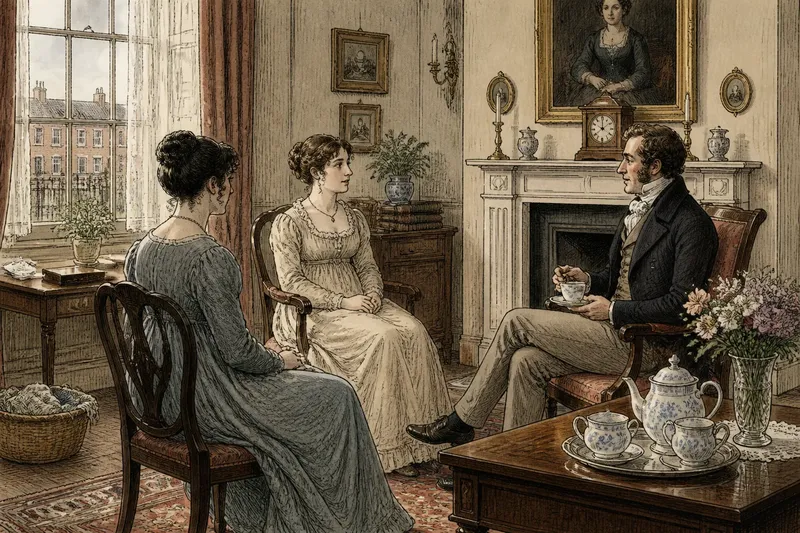
The common mistake is to treat the parlour as a neutral room where anyone could sit and talk. In British and North American homes of the eighteenth and nineteenth centuries, a room called a parlour could serve as a reception space, but its use depended on the household, its resources, and local custom. The room did not erase social boundaries; it helped make them visible.
What did a parlour do in these households?
In many British and North American homes of the eighteenth and nineteenth centuries, “parlour” referred to a room used for receiving visitors, though the name and purpose varied by place and period. It might be the best-furnished room, a front room near the entrance, or a space that also served other household needs.
Receiving someone there created a boundary between company and the less public routines of the home. A visitor might be welcomed without being taken through work areas or private rooms. The room’s arrangement could signal preparation for company, even when the household’s other spaces were busy with daily tasks.
Which visits suited the room?
Why receive a formal caller in the parlour?
A separate receiving room could let a host present the household while keeping the visit contained. Carefully arranged chairs and visible objects made space for conversation and display. The practice varied, so the room alone cannot establish how formal a visit was.
Why might a neighbor be welcomed near the entrance?
A front room could make a short visit convenient, allowing a caller to be received without crossing through the rest of the home. In a particular household, that arrangement might also help distinguish an ordinary visit from a more intimate one. Neither use was universal.
Did relatives always meet in the parlour?
No. Relatives might gather in a kitchen, dining room, or another shared space when practical activity mattered more than ceremony. A parlour could host family company too, but its formality was not necessary for every household or occasion.
What if a home had no separate parlour?
A dedicated room was not a condition of hospitality. A front room, cleared table, or flexible corner could make room for a visitor, with everyday work remaining more visible. That difference says something about the home’s layout and resources, not the quality of its welcome.
How did furnishings shape the encounter?
Chairs gave visitors a place to sit, while their placement influenced how people faced one another. A table could hold refreshments or objects for display; a sofa could gather several people. Such details suggest possible uses, but they do not reveal exactly what a conversation was like.
A clock, portrait, book, framed sampler, or ornament might express a household’s tastes or relationships. The meaning was not fixed: a visitor’s response depended on the object and the people who recognized it. Furnishings could also offer an easy subject for conversation when guests did not yet know one another well.
Say a household in an imagined nineteenth-century town expects a visiting cousin who has not seen the home before. The family clears a workbasket from the front room, places two chairs near the window, and leaves a family portrait visible. The expected result is a more deliberate welcome and a few natural openings for conversation; it does not determine what anyone will say.
Who could enter, and who shaped the talk?
Access varied with household rules, relationships, local customs, and social position. Kin, neighbors, and other callers might be received in a parlour, while workers or people outside a household’s circle could have different roles or be directed elsewhere. A room’s invitation was therefore limited by the host’s decisions and the conventions surrounding the visit.
Conversation also depended on more than the people seated in the room. Someone might prepare or serve refreshments without joining the exchange, and the host could guide its pace or subjects. The scene included the labor and boundaries that made a visit possible, even when a written account mentioned only the guests.
Children’s place in a visit could vary as well. They might greet a caller, stay nearby, or be asked to leave the room. A description of their presence—or absence—can offer clues about the household’s expectations for company, but it should not be treated as proof of a rule shared by every family.
How can you read a parlour description?
When a memoir, letter, or other account mentions a parlour, ask what the text actually tells you before drawing conclusions. These clues can help:
- If the account places the room near the entrance, consider whether visitors could be received without entering more private areas; if it gives no location, leave the layout open.
- If chairs are described as facing one another, consider whether the arrangement supported direct conversation; if their placement is not stated, do not infer the seating pattern.
- If a table holds tea or other refreshments, consider whether the visit included serving; if no service is mentioned, avoid assuming it took place.
- If the account names portraits, books, or keepsakes, ask whether it explains their significance; if not, treat their meaning as uncertain.
- If workers or household members appear in the scene, note whether they speak or serve; if their roles are omitted, do not assume they were absent.
- If children are mentioned, note whether they join, observe, or leave; if the account is silent, do not assign them a role.
Imagine an invented letter from a household in an early nineteenth-century British town. It says that a caller was received in the front parlour, notes two chairs and a portrait, and mentions tea being served. You can conclude that this visit took place in a designated front room and included refreshments; you cannot establish from those details alone why the chairs were placed that way, what the portrait meant to the family, or who prepared the tea.
What is not worth the effort?
It is not useful to search for one definition that fits every parlour across centuries and regions. The word points toward a kind of room, not a universal floor plan or social script. Pay attention instead to the setting, the people named, and what the account leaves unsaid.
When the parlour became a place for conversation, its importance lay in how a household used space to receive others while managing privacy and social expectations. Read the room alongside its visitors and the work around it; that keeps the scene vivid without making a single household stand for them all.